
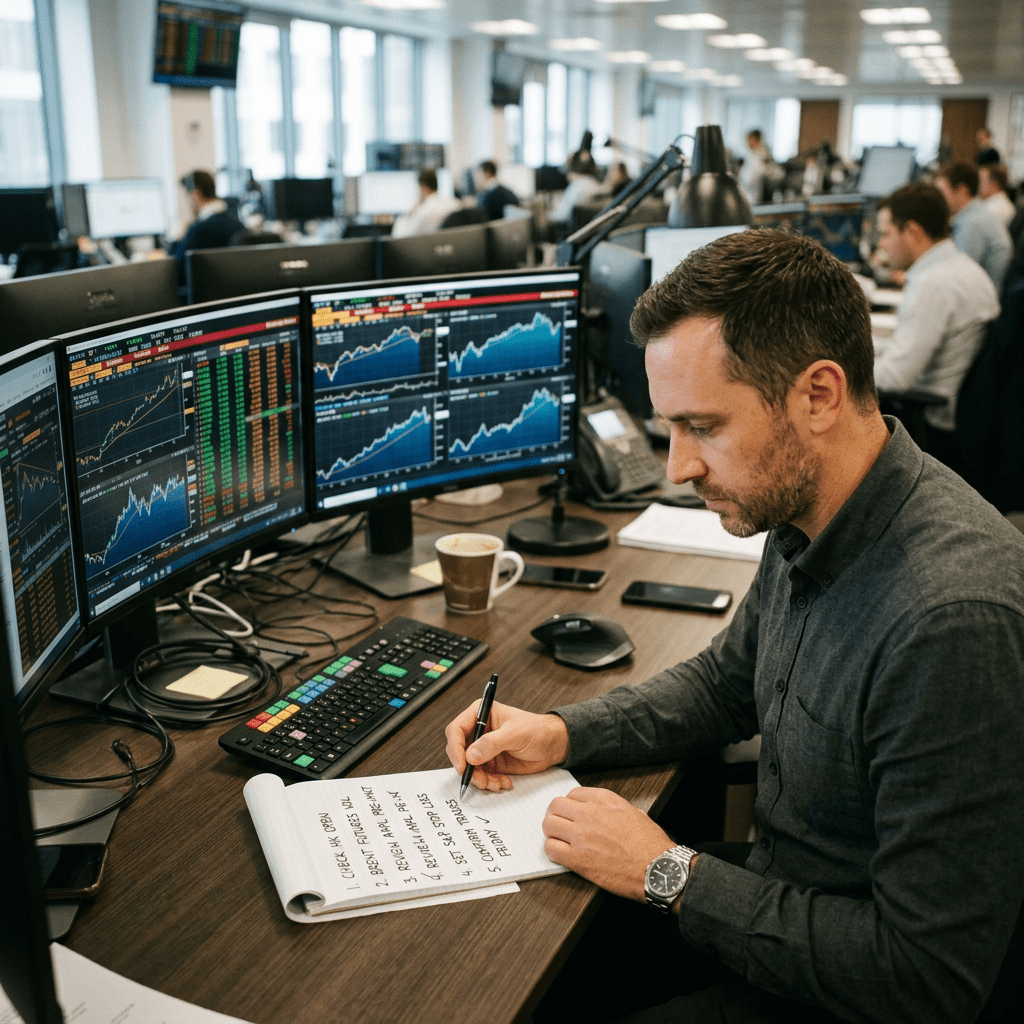
Why Every Futures Investor Needs a Checklist
Futures investing should never begin with impulse.
It should begin with preparation.
Futures markets can give investors access to major global markets, including stock indexes, commodities, currencies, interest rates, energy products, metals, and agricultural markets. That access can be valuable for learning and market participation, but it also comes with serious responsibilities.
Futures contracts involve margin, leverage, volatility, expiration dates, contract specifications, and fast reactions to economic events. For beginners, these features can create risk very quickly when they are not understood.
That is why Invesmart believes in a demo-first approach.
Before real capital is involved, investors should use a demo account to understand the market, test ideas, define risk, build discipline, and review decisions.
A checklist helps make that process practical.
It gives investors a simple way to pause and ask:
Have I done the work required before risking real money?
If the answer is no, the next step is not to rush.
The next step is more preparation.
The Purpose of the Demo-First Checklist
A checklist is not a guarantee.
It does not remove risk. It does not predict market movement. It does not promise results.
Instead, a checklist helps investors avoid preventable mistakes.
It creates structure before action.
The purpose of this checklist is to help you evaluate whether you have built the basic habits needed for responsible futures learning.
Those habits include:
- Understanding the futures contract
- Observing one market consistently
- Using a demo account with structure
- Defining risk before every decision
- Setting position size rules
- Tracking economic events
- Keeping a journal
- Reviewing results weekly
- Measuring process quality
- Managing emotional reactions
- Knowing when not to act
- Transitioning slowly if real capital is ever considered
This checklist should be used before any investor moves beyond demo mode.
It can also be used weekly during demo practice.
The goal is not perfection.
The goal is honest self-assessment.
Section 1: Market Understanding Checklist
Before using real capital, you should understand the market you are studying.
You do not need to know everything about every futures market. But you should understand the specific contract and market you are considering.
Ask yourself:
- Do I know what futures contract I am studying?
- Do I know what underlying market it represents?
- Do I understand the contract size?
- Do I know the tick size and tick value?
- Do I know when the contract expires?
- Do I understand the trading hours?
- Do I know the margin requirement shown on my platform?
- Do I know which economic events usually affect this market?
- Do I understand whether the market is usually calm, volatile, or news-sensitive?
- Have I followed this market long enough to recognize basic behavior?
If you cannot answer these questions clearly, stay in demo mode.
Market understanding is the foundation.
Without it, every decision becomes weaker.
A beginner should not risk real money in a futures contract they cannot explain.
Section 2: Demo Account Structure Checklist
A demo account should not be treated like a game.
It should be treated like a training environment.
Ask yourself:
- Have I chosen one market to study instead of jumping across many?
- Have I created a written demo plan?
- Do I know what I am trying to learn in demo mode?
- Have I set a realistic simulated account size?
- Am I using realistic simulated position sizes?
- Have I defined when I will place simulated decisions?
- Have I defined when I will avoid action?
- Am I tracking my decisions in writing?
- Am I reviewing my demo results weekly?
- Am I using demo mode to build discipline, not entertainment?
If your demo practice has been random, the checklist is showing you what to fix.
Random demo practice can create false confidence.
Structured demo investing can create useful learning.
Section 3: Risk Management Checklist
Risk management is one of the most important parts of futures investing.
Before considering real capital, your demo process should show that you understand and respect risk.
Ask yourself:
- Do I define risk before every simulated decision?
- Do I know my maximum acceptable simulated loss per decision?
- Do I have a daily simulated loss limit?
- Do I have a weekly simulated loss limit?
- Do I know when to stop for the day?
- Do I know when to pause for the week?
- Do I understand that margin is not the same as maximum loss?
- Do I understand how leverage affects gains and losses?
- Do I know how position size changes risk?
- Do my losses usually stay within planned limits?
- Do I avoid increasing size after losses?
- Do I avoid increasing size after gains unless my plan allows it?
- Do I understand what could go wrong before I enter?
If risk is unclear, do not continue toward real capital.
In futures investing, risk should be planned before action.
Not after.
Section 4: Position Size Checklist
Position size determines how much exposure you are taking.
Even a reasonable idea can become dangerous if the position size is too large.
Ask yourself:
- Do I have a written position size rule?
- Is my simulated position size realistic?
- Do I know how much each tick or point is worth?
- Does my position size fit my risk limit?
- Can I remain calm with this position size?
- Do I avoid changing size based on emotion?
- Do I avoid using large demo size just to create exciting results?
- Do I understand how larger size affects drawdown?
- Have I tested smaller size before considering anything larger?
- Would this position size make sense if real money were involved?
Position size should be based on risk, not confidence.
A strong investor does not ask, “How big can I go?”
A strong investor asks, “What size allows me to follow my plan and protect capital?”
Section 5: Economic Events Checklist
Futures markets often react to economic news.
Before using real capital, investors should know how economic events affect the market they are studying.
Ask yourself:
- Do I check the economic calendar each week?
- Do I know which events matter most for my chosen market?
- Do I know when inflation reports are released?
- Do I track employment data when relevant?
- Do I pay attention to central bank decisions?
- Do I understand how interest rate expectations may affect my market?
- Do I know whether energy inventory reports matter for the contract I follow?
- Do I have a rule for high-impact news events?
- Do I observe volatile events before trying to participate?
- Do I record market reactions to news in my journal?
Beginners should be careful around high-impact events.
The goal is not to chase news.
The goal is to understand how news changes market behavior and risk.
Section 6: Journaling Checklist
A futures demo journal is one of the most important tools in the learning process.
Without a journal, it becomes difficult to know whether you are improving or repeating mistakes.
Ask yourself:
- Do I record every simulated decision?
- Do I record no-action decisions?
- Do I write down the reason for each decision?
- Do I define risk before entry in the journal?
- Do I record position size?
- Do I record the market condition?
- Do I note relevant economic events?
- Do I track whether I followed my rules?
- Do I record emotional state?
- Do I write one lesson after each decision?
- Do I review the journal weekly?
- Do I use the journal to improve my process?
If you are not journaling consistently, you may not have enough evidence to evaluate readiness.
Memory is not enough.
A journal creates proof of behavior.
Section 7: Decision Quality Checklist
Good investors review the quality of their decisions, not only the outcome.
Before considering real capital, ask yourself:
- Did I follow my written plan?
- Did I understand the market condition?
- Did I define risk before action?
- Did I use appropriate position size?
- Did I avoid emotional decisions?
- Did I follow my exit rule?
- Did I record the decision honestly?
- Did I review whether the result came from process or luck?
- Did I learn from both gains and losses?
- Did I avoid celebrating bad decisions just because they worked?
- Did I avoid abandoning good decisions just because they lost?
This is critical.
A profitable simulated result does not always mean the decision was good.
A losing simulated result does not always mean the decision was bad.
Decision quality matters because it shows whether your process is repeatable.
Section 8: Emotional Discipline Checklist
Futures investing is not only technical.
It is emotional.
Margin, leverage, volatility, and real-time price movement can create pressure. Before using real capital, investors should understand their emotional patterns in demo mode.
Ask yourself:
- Do I know when I feel impatient?
- Do I know when I feel fear of missing out?
- Do I become frustrated after losses?
- Do I become overconfident after gains?
- Do I feel pressure to recover losses quickly?
- Do I chase market movement?
- Do I change rules when uncomfortable?
- Do I exit early because of fear?
- Do I hold too long because I do not want to be wrong?
- Do I record emotions in my journal?
- Can I follow my rules even when emotions appear?
The goal is not to eliminate emotions.
The goal is to recognize them and avoid letting them control decisions.
If emotions regularly break the process in demo mode, real capital may make the problem stronger.
Section 9: No-Action Discipline Checklist
One of the strongest signs of discipline is the ability not to act.
Beginners often believe that market movement requires participation. It does not.
Ask yourself:
- Can I watch the market without placing a position?
- Do I record no-action decisions?
- Can I avoid trading during unclear conditions?
- Can I avoid high-impact news events when my plan says to observe only?
- Can I stop after reaching a loss limit?
- Can I stop after a gain instead of becoming overconfident?
- Can I avoid acting when I feel emotional?
- Can I accept that missing a move is part of the process?
- Can I treat patience as progress?
- Do I understand that no action can protect capital?
If you cannot stay out when conditions are poor, you are not ready to go live.
Capital protection often begins with restraint.
Section 10: System-Market Fit Checklist
A strategy or system should fit the market where it is being tested.
Not every approach works in every futures market.
Ask yourself:
- Have I tested one approach in one market?
- Do I know what conditions the approach needs?
- Does the market regularly provide those conditions?
- Do I understand when the system should not be used?
- Does volatility fit my risk plan?
- Do economic events disrupt the approach?
- Can I follow the system consistently?
- Does the system fit my schedule and personality?
- Have I tested it long enough to gather useful evidence?
- Have I reviewed both good and bad results?
- Am I forcing the system into a market where it does not belong?
System-market fit should be tested in demo mode before real capital is involved.
If the fit is unclear, continue testing.
Section 11: Demo Metrics Checklist
Before moving beyond demo, review your metrics.
Simulated profit and loss is not enough.
Ask yourself:
- What is my rule-following rate?
- How often do I define risk before entry?
- What is my maximum drawdown?
- What is my average simulated loss?
- Do my losses stay within planned limits?
- Is my position size consistent?
- How often do I violate rules?
- How often do I record no-action decisions?
- What is my journal completion rate?
- What emotions appear most often?
- Have my weekly reviews improved?
- Do my metrics show progress over several weeks?
Readiness should be measured.
It should not be assumed.
If your metrics are weak, the answer is more demo practice.
Section 12: Transition Checklist Before Real Capital
If you eventually consider real capital, the transition should be slow and structured.
Ask yourself:
- Have I completed a meaningful demo testing period?
- Do I have evidence of consistent rule-following?
- Are my losses controlled?
- Do I understand the emotional difference between demo and real money?
- Have I created a real-money transition plan?
- Will I start with small exposure?
- Do I have strict risk limits?
- Do I have a rule for increasing size?
- Do I have a rule for pausing?
- Do I have a rule for returning to demo mode?
- Will I continue journaling every decision?
- Will I continue weekly reviews?
Moving beyond demo should not mean abandoning the demo-first process.
It should mean carrying that process into a more serious environment.
Red Flags That Mean Stay in Demo Mode
Stay in demo mode if any of these are true:
- You do not understand the futures contract
- You do not know the tick value or contract size
- You do not define risk before decisions
- You use unrealistic demo position sizes
- You break rules frequently
- You do not keep a journal
- You ignore economic events
- You chase market movement
- You increase size emotionally
- You cannot stop after losses
- You focus only on potential returns
- You do not review your process
- You cannot explain your system
- You feel impatient to go live without evidence
These red flags are not failures.
They are warnings.
The demo account exists to reveal them before real money is involved.
Green Flags That Show Progress
Progress may be visible when:
- You understand one futures contract clearly
- You follow one market consistently
- You define risk before every decision
- You use realistic position size
- Your losses stay within planned limits
- You journal every decision
- You record no-action decisions
- You review weekly
- You understand your emotional triggers
- You follow rules even after gains or losses
- You know when not to act
- You can explain your system-market fit
- Your metrics show improvement over time
These signs do not remove risk.
But they show that your process is becoming more disciplined.
That is the purpose of demo-first investing.
How to Use This Checklist
This checklist should not be used once and forgotten.
Use it at different stages of your learning process.
Use it:
- Before opening a demo account
- After your first week of demo observation
- Before testing a strategy
- After a losing week
- After a winning week
- Before increasing simulated size
- Before considering real capital
- After any emotional mistake
- During weekly reviews
A checklist is most valuable when it becomes a habit.
It helps you slow down, think clearly, and avoid rushing into decisions that are not supported by preparation.
The Final Question
Before risking real capital, ask yourself one final question:
Would I trust this process if the next decision loses money?
This question matters.
If the answer is no, you may not have enough confidence in your process yet.
If the answer is yes, the next question is:
Do I have the risk controls to survive being wrong?
Futures investing requires humility.
Even a strong process can experience losses. Even careful investors can be wrong. The goal is not to eliminate uncertainty.
The goal is to prepare for it.
Conclusion
A demo-first futures investing checklist helps investors evaluate whether they are building the knowledge, discipline, and risk awareness needed before real capital is considered.
The checklist should cover market understanding, demo structure, risk management, position size, economic events, journaling, decision quality, emotional discipline, no-action behavior, system-market fit, demo metrics, and transition planning.
At Invesmart, we believe futures investing should begin with preparation, not impulse.
Use the checklist. Review the evidence. Respect the risk. Practice before capital.

