
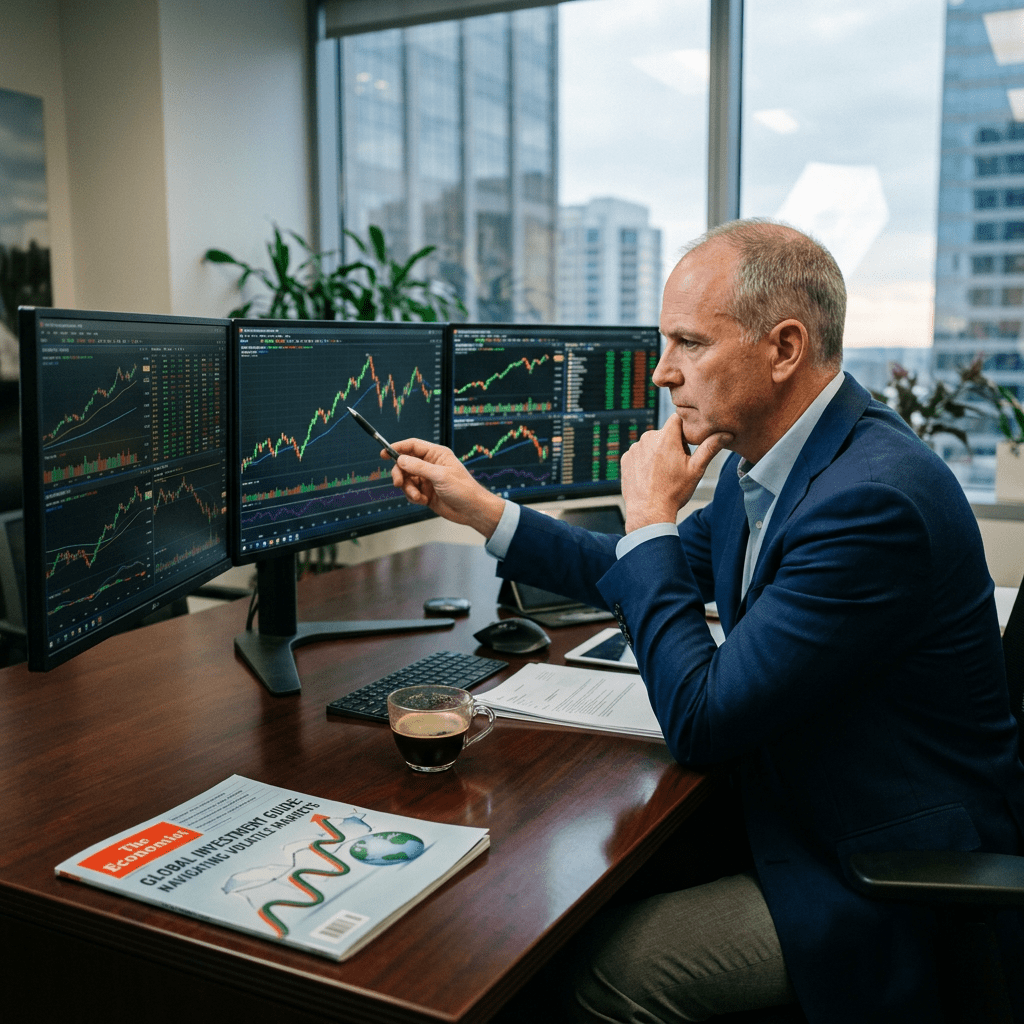
Futures Give Investors a Window into Major Markets
Futures markets are connected to some of the most important areas of the global economy.
They include stock indexes, commodities, currencies, interest rates, energy products, metals, and agricultural markets. These markets influence businesses, consumers, investors, governments, and financial institutions around the world.
For a beginner, that may sound overwhelming.
But it also creates an opportunity.
Futures can help investors understand how major markets move, what drives price changes, and how economic expectations are reflected in real time. They are not just tools for short-term speculation. When approached with discipline, futures can become an educational conduit for learning how global markets work.
At Invesmart, we believe beginners should approach futures through a demo-first framework.
That means using a demo account to observe, study, and test ideas before risking real money.
The goal is not to rush into live trading.
The goal is to learn how futures provide access to major markets and why that access must be handled with risk awareness.
What Does Market Access Mean?
Market access means the ability to participate in or observe the price movement of a specific market.
For example, an investor may want exposure to the broad stock market, crude oil, gold, currencies, or interest rate expectations. Futures contracts are one way market participants can access those areas.
A futures contract is tied to an underlying market or asset.
That underlying market may be:
- A stock index
- A commodity
- A currency
- An interest rate product
- An energy product
- A metal
- An agricultural product
This means futures allow investors to study more than individual companies.
A stock investor may focus on one business.
A futures investor may observe broader economic forces.
For example, stock index futures can reflect investor sentiment toward the overall equity market. Crude oil futures can reflect energy supply and demand. Gold futures can reflect inflation expectations, interest rates, and safe-haven demand.
This broad access is one reason futures are important.
But access is not the same as readiness.
Beginners should study these markets carefully in demo mode before using real capital.
Access to Stock Index Markets
One of the most common reasons investors study futures is to understand stock index markets.
Stock index futures are connected to broad market indexes. Instead of focusing on one company, they reflect the movement of a larger group of stocks.
This can help investors observe:
- Broad market sentiment
- Risk appetite
- Economic expectations
- Interest rate concerns
- Reactions to inflation data
- Reactions to employment reports
- Reactions to central bank commentary
- Expectations about corporate earnings
For example, if stock index futures move sharply after an inflation report, that movement may show how investors are interpreting the data.
Are they worried about higher interest rates?
Are they encouraged by cooling inflation?
Are they shifting toward or away from risk?
A demo account allows beginners to observe these reactions without placing real money at risk.
This is valuable because stock index futures can move quickly, especially around major economic events.
Observation helps investors connect market movement to economic context.
Access to Commodity Markets
Futures are also widely used to access commodity markets.
Commodities include physical goods such as energy products, metals, and agricultural products.
Examples include:
- Crude oil
- Natural gas
- Gold
- Silver
- Corn
- Wheat
- Soybeans
- Copper
Commodity futures are important because they are connected to real-world supply and demand.
Crude oil futures may respond to energy inventory reports, production decisions, geopolitical events, and global demand expectations.
Gold futures may respond to inflation, interest rates, currency strength, and investor uncertainty.
Agricultural futures may respond to weather, crop conditions, supply disruptions, and global demand.
For investors, commodity futures can provide insight into inflation pressures, economic growth, supply chains, and geopolitical risk.
But commodities can also be volatile.
That is why beginners should study them carefully in demo mode before considering any real-money decision.
Access to Currency Markets
Currency futures allow investors to observe exchange rate movement between currencies.
Currencies are influenced by many factors, including:
- Interest rate expectations
- Central bank policy
- Inflation
- Economic growth
- Political uncertainty
- Global capital flows
- Trade conditions
Currency futures can help investors understand how money moves between economies.
For example, if one country’s central bank is expected to raise interest rates while another is expected to cut rates, currency markets may react.
A stronger currency can affect exports, imports, inflation, and international investment flows.
For beginners, currency futures can be educational because they show how economic policy and global expectations connect.
However, currencies can be difficult to interpret. Market reactions may depend not only on current data, but also on what investors expected before the data was released.
This makes demo observation especially useful.
The goal should be to study how currencies respond to information before making any real-money decision.
Access to Interest Rate Markets
Interest rate futures are connected to expectations about future interest rates and debt markets.
These markets may be more complex for beginners, but they are extremely important because interest rates influence nearly every financial asset.
Interest rates can affect:
- Stock valuations
- Bond prices
- Currency strength
- Borrowing costs
- Consumer spending
- Business investment
- Housing markets
- Commodity prices
- Investor risk appetite
When investors study interest rate futures, they are studying expectations about monetary policy and future economic conditions.
For example, if markets expect a central bank to raise rates, interest rate futures may reflect that expectation. If investors begin expecting rate cuts, those markets may adjust.
Even beginners who do not actively use interest rate futures can benefit from understanding that rate expectations influence many other futures markets.
This is why market understanding matters.
Futures markets are connected.
A move in one area can affect another.
Access to Energy Markets
Energy futures are among the most closely watched markets in the world.
Crude oil, natural gas, gasoline, and other energy-related futures are tied to global supply and demand.
Energy prices can influence:
- Inflation
- Transportation costs
- Consumer spending
- Corporate margins
- Geopolitical relationships
- Currency movement
- Commodity-linked economies
Crude oil futures may react to inventory reports, OPEC decisions, production cuts, geopolitical tensions, refinery activity, and demand forecasts.
Natural gas futures may react to weather, storage data, seasonal demand, and production levels.
For beginners, energy futures can be fascinating because they connect financial markets to real-world events.
But they can also be highly volatile.
That volatility makes risk management essential.
A demo-first approach allows investors to observe energy market behavior and learn how quickly prices can change during major news events.
Access to Metals Markets
Metals futures include markets such as gold, silver, copper, and other industrial or precious metals.
Gold is often watched as a market connected to inflation expectations, interest rates, currency strength, and uncertainty.
Copper is often watched as a market connected to industrial demand and global growth.
Silver may have both precious metal and industrial characteristics.
Studying metals futures can help investors understand:
- Inflation concerns
- Safe-haven demand
- Industrial activity
- Currency effects
- Global growth expectations
- Interest rate sensitivity
For example, if interest rates rise, gold may react differently depending on inflation expectations and currency movement.
This teaches an important lesson:
Markets do not move because of one factor alone.
They move because participants are constantly adjusting expectations.
A demo account helps investors observe this complexity without taking real financial risk.
Access to Agricultural Markets
Agricultural futures include products such as corn, wheat, soybeans, coffee, cotton, and livestock-related contracts.
These markets are deeply connected to real-world supply and demand.
Agricultural futures may respond to:
- Weather conditions
- Crop reports
- Planting and harvest expectations
- Global demand
- Export activity
- Supply disruptions
- Government policy
- Currency movement
For investors, agricultural futures can provide insight into food supply chains, inflation pressures, and global trade.
However, these markets can be difficult for beginners because they may require specialized knowledge.
Weather patterns, crop cycles, and regional production issues can all matter.
This does not mean beginners cannot learn from agricultural markets.
It means they should approach them slowly, with observation first.
Demo mode is useful because it allows investors to study how these markets react without committing capital.
Futures Help Investors Understand Economic Connections
One of the most valuable parts of studying futures is learning how markets connect.
A change in interest rate expectations can affect stock index futures, currency futures, gold futures, and bond-related futures.
A rise in crude oil prices can influence inflation expectations, consumer spending concerns, and energy-related currencies.
A strong employment report can affect stock indexes, interest rates, currencies, and central bank expectations.
A geopolitical event can affect energy, gold, currencies, and risk sentiment.
Futures markets help investors see these relationships in real time.
This is why they can be powerful educational tools.
A beginner who studies futures carefully may begin to understand how inflation, rates, growth, commodities, and currencies interact.
That understanding can improve market awareness across many areas of investing.
Access Does Not Mean Simplicity
Although futures provide access to major markets, they are not simple instruments.
They require serious preparation.
Investors must understand:
- Contract specifications
- Tick size and tick value
- Margin requirements
- Leverage
- Expiration dates
- Settlement rules
- Volatility
- Market drivers
- Economic events
- Position sizing
- Risk limits
This is why beginners should not confuse access with ease.
A futures platform may make it possible to observe or participate in many markets. But just because access is available does not mean the investor is ready to use real capital.
At Invesmart, we believe the correct first step is education.
Then observation.
Then demo testing.
Then review.
Only after that should an investor consider whether any real-money step is appropriate.
Why Demo Mode Is Essential for Market Access
Because futures provide access to so many markets, demo mode is especially useful.
A demo account allows beginners to explore markets without financial pressure.
But exploration should still be structured.
Instead of jumping across every available contract, choose one market and study it deeply.
For example:
- Follow one stock index future for four weeks
- Track how it reacts to inflation and employment data
- Record volatility before and after major events
- Study tick value and margin information
- Keep a journal of observations
- Avoid real capital until the market becomes clearer
This process turns market access into market education.
The goal is not to use every futures market.
The goal is to learn how to study one market responsibly.
That skill can later be applied to other markets.
How to Choose One Market to Study First
Beginners should choose a futures market that is understandable and relevant to their learning goals.
Ask:
- Am I interested in this market?
- Can I find reliable information about what drives it?
- Do I understand what the contract represents?
- Is the market too volatile for my current skill level?
- Can I follow the economic events that affect it?
- Can I observe it consistently?
- Can I explain why I chose it?
A beginner might start with a broad stock index future because it connects to familiar equity markets.
Another investor may choose gold because they are interested in inflation, interest rates, and safe-haven demand.
Another may choose crude oil because they want to understand energy markets.
There is no single correct market for everyone.
The important point is to choose intentionally.
Do not choose a market only because it moves quickly.
Choose a market because you are willing to study it carefully.
What to Track in Demo Mode
When studying one futures market, track the following:
Contract Details
Know the contract size, tick value, expiration date, and margin requirement.
Market Drivers
Identify the economic events and news that affect the market.
Daily Direction
Record whether the market moved up, down, or sideways.
Volatility
Note whether movement was calm, moderate, or sharp.
Economic Events
Track inflation reports, employment data, central bank decisions, inventory reports, or other relevant releases.
Emotional Response
Record whether the market made you feel impatient, fearful, excited, or confused.
No-Action Decisions
Write down when you chose to observe instead of act.
Weekly Lessons
Review what the market taught you each week.
This transforms demo market access into structured learning.
The Risk of Too Much Choice
Futures markets offer variety, but too much choice can hurt beginners.
When many markets are available, investors may jump from one to another looking for movement.
This can create shallow learning.
Instead of understanding one market deeply, the investor develops a habit of chasing activity.
That is not the Invesmart approach.
A demo-first investor should avoid random market hopping.
Depth is more important than variety.
Choose one market.
Observe it.
Study it.
Journal it.
Review it.
Only after building a process should you consider studying another market.
This creates disciplined market education.
Conclusion
Investors use futures to access major markets such as stock indexes, commodities, currencies, interest rates, energy products, metals, and agricultural markets.
This access can help investors understand the global economy, observe market expectations, and study how different forces interact.
But futures are powerful instruments. They involve margin, leverage, contract specifications, expiration dates, volatility, and risk.
That is why beginners should approach futures with a demo-first mindset.
Use a demo account to observe one market, study its drivers, track economic events, and build discipline before risking real capital.
At Invesmart, we believe futures should be treated as an educational market-access tool first.
Choose one market. Study it deeply. Respect the risk. Practice before capital.

