
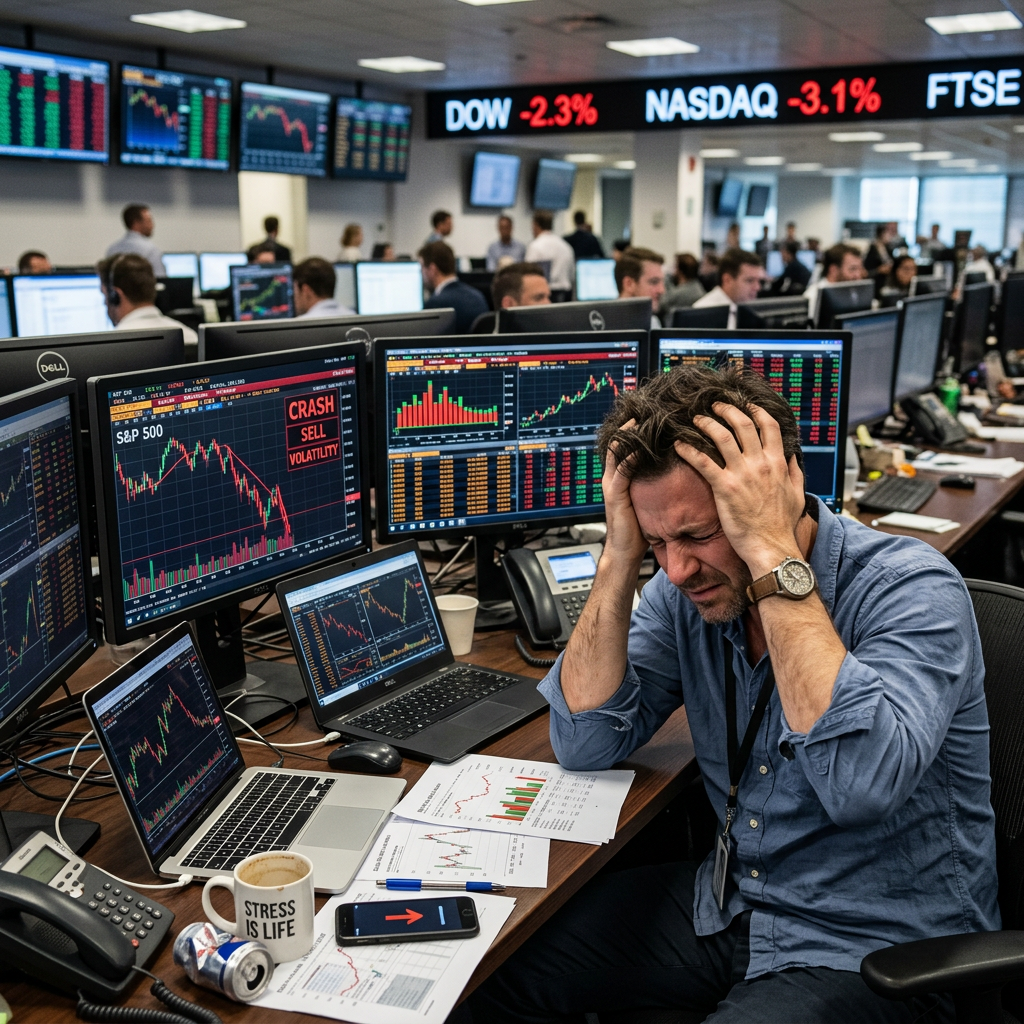
The Transition from Demo to Real Capital Is a New Test
Moving from demo mode to real capital is a major psychological shift.
In demo mode, investors can observe markets, test ideas, set risk limits, and practice decision-making without risking real money. That makes demo accounts valuable, especially for futures investors who need to understand margin, leverage, volatility, contract specifications, and economic events.
But leaving demo mode introduces a new challenge.
Real money changes the experience.
A simulated loss may feel like data. A real loss may feel personal. A simulated gain may feel encouraging. A real gain may create excitement, confidence, or pressure to do more.
That is why the transition from demo to real capital should be slow, structured, and risk-aware.
At Invesmart, we believe demo-first investing does not end when an investor leaves demo mode. The same habits built in simulation should continue with real capital.
The mistake many investors make is assuming that going live means the learning phase is over.
It does not.
Going live is simply the next stage of learning.
Mistake 1: Becoming Overconfident After Demo Success
One of the most common mistakes investors make after leaving demo mode is becoming overconfident.
A strong demo period can be encouraging. It may show that the investor has learned the contract, followed rules, managed simulated risk, and built a process. But demo success does not guarantee real-money success.
Real capital introduces emotional pressure.
An investor may have followed rules well in demo mode because the losses were not real. Once real money is involved, the same investor may hesitate, exit too early, hold too long, increase size emotionally, or avoid good process because fear appears.
Overconfidence can show up in several ways:
- Starting with too much size
- Assuming demo results will repeat immediately
- Ignoring the emotional difference of real money
- Reducing journaling because confidence is high
- Taking decisions outside the original plan
- Believing one successful demo period proves mastery
This is dangerous.
A better mindset is:
“My demo results show that I have built a process worth testing carefully. They do not prove that I am beyond risk.”
That mindset keeps the investor humble.
Mistake 2: Starting Too Large
Another common mistake is starting with too much real exposure.
In demo mode, an investor may have used a certain position size comfortably. But real money can make the same size feel very different.
What seemed manageable in simulation may feel stressful when actual capital is at risk.
This is why the first real-money step should be small.
The goal should not be to maximize returns immediately. The goal should be to test whether the investor can follow the same process under real emotional pressure.
Starting too large can create problems:
- Losses feel more painful
- Emotions become harder to control
- The investor may abandon the plan
- Fear can cause poor exits
- Overconfidence can lead to more risk
- One early mistake can damage confidence
A careful transition should begin with the smallest reasonable exposure that allows the investor to experience real-money discipline without taking unnecessary risk.
Real capital should be introduced gradually.
Mistake 3: Abandoning the Demo Process
Some investors treat demo mode like a temporary training phase that ends completely once real money begins.
This is a mistake.
The routines built in demo mode should continue.
That includes:
- Reviewing the market before decisions
- Checking the economic calendar
- Defining risk before entry
- Using written rules
- Respecting position size limits
- Recording every decision
- Tracking emotions
- Reviewing results weekly
- Recording no-action decisions
- Evaluating process, not just outcome
If those habits disappear after going live, the investor loses the structure that made demo practice valuable.
A good transition plan keeps the same process.
Only the capital environment changes.
The investor should not say, “Now I am live, so I can stop journaling.”
The investor should say, “Now I am live, so journaling matters even more.”
Mistake 4: Increasing Size Too Quickly
After a few positive real-money decisions, investors may feel tempted to increase size.
This is common.
A small gain can create confidence. The investor may think, “The process works. I should use more size.”
But increasing size too quickly can create emotional and financial pressure.
A position size that feels manageable after gains may feel overwhelming after losses.
Size should not increase because of excitement. It should increase only according to a written rule and after enough evidence.
Before increasing size, ask:
- Have I followed my rules consistently with real money?
- Have I experienced both gains and losses?
- Have I handled a drawdown without abandoning the plan?
- Have I journaled every decision?
- Has my emotional control remained stable?
- Is the size increase part of my written transition plan?
- Would this increase still make sense after a loss?
If the answer is unclear, do not increase size.
The goal after demo mode is not speed.
The goal is responsible progress.
Mistake 5: Ignoring the Emotional Difference
Demo mode can teach a lot, but it cannot perfectly recreate the emotional experience of real money.
Some investors underestimate this difference.
They assume that because they were calm in demo mode, they will be calm with real capital. That may or may not be true.
Real money can create emotions such as:
- Fear of losing
- Urgency to protect gains
- Desire to recover losses
- Overconfidence after success
- Anxiety during volatility
- Frustration after mistakes
- Hesitation before decisions
- Pressure to prove readiness
These emotions are normal.
The problem is not having emotions. The problem is letting emotions control decisions.
After leaving demo mode, investors should track emotions even more carefully.
Every journal entry should include an emotional note.
For example:
“I followed the plan, but I felt more nervous than I did in demo mode.”
Or:
“I exited early because I wanted to protect a small gain. This was not part of the plan.”
These notes are important.
They reveal whether the investor’s process can survive real pressure.
Mistake 6: Judging Readiness by One Real-Money Result
One real-money result does not prove anything.
A first real-money decision may produce a gain. That does not mean the investor is fully ready.
A first real-money decision may produce a loss. That does not mean the investor has failed.
Beginners often give too much meaning to early outcomes.
After one gain, they may become overconfident.
After one loss, they may become discouraged or abandon the plan.
Both reactions are emotional.
The transition from demo to real capital should be evaluated over a series of decisions and reviews.
The investor should ask:
- Did I follow my plan?
- Did I define risk before entry?
- Was my position size appropriate?
- Did I handle emotions well?
- Did I journal the decision?
- Did the result stay within expected risk?
- What did I learn?
The first real-money phase is not about proving greatness.
It is about testing discipline.
Mistake 7: Forgetting No-Action Discipline
After going live, some investors feel that because real money is now involved, they must take action to justify the transition.
This is a mistake.
No-action discipline remains important.
There will still be times when the best decision is to wait.
For example, no action may be appropriate when:
- A major economic event is about to be released
- The market is too volatile
- The investor feels emotional pressure
- The setup does not match the plan
- Risk cannot be defined clearly
- The daily limit has been reached
- The investor is tired or distracted
A real-money investor should still record no-action decisions.
This reinforces the idea that discipline includes restraint.
Leaving demo mode does not mean every market movement deserves participation.
Sometimes the best real-money decision is no decision at all.
Mistake 8: Chasing Losses
Chasing losses is one of the most dangerous mistakes investors can make.
It happens when an investor experiences a loss and immediately tries to recover it by taking another decision, increasing size, or abandoning the plan.
In futures investing, this can become especially risky because leverage can magnify the impact of poor decisions.
Chasing losses often comes from emotional discomfort.
The investor does not want to end the day down. They want to feel in control again. They want to erase the mistake.
But the market does not care about an investor’s desire to recover.
A strong transition plan should include a rule for losses.
For example:
- Stop after reaching the daily loss limit
- Review the journal before taking another decision
- Do not increase size after a loss
- Take a break after an emotional mistake
- Return to demo mode if rule violations repeat
Losses should trigger review, not revenge.
Mistake 9: Treating Real Capital Like Demo Capital
In demo mode, investors may take risks that they would never take with real money.
If those habits continue after going live, the consequences become real.
Treating real capital like demo capital may include:
- Using unrealistic position sizes
- Ignoring losses
- Clicking without a written reason
- Testing random ideas live
- Skipping the journal
- Changing markets impulsively
- Acting during news events without a plan
- Increasing risk because “it worked in demo”
The purpose of demo mode is to prepare for real discipline.
It is not meant to create reckless confidence.
When real capital is involved, every decision should be more structured, not less.
The investor should move slower, not faster.
Mistake 10: Refusing to Return to Demo Mode
Some investors see returning to demo mode as failure.
It is not.
Returning to demo mode can be a smart decision when the live process begins to break down.
An investor may need to return to demo if:
- Rule violations increase
- Losses exceed planned limits
- Emotions become difficult to manage
- The market environment changes
- A strategy no longer fits the market
- Journaling becomes inconsistent
- Position size becomes emotional
- The investor feels pressure to recover losses
Demo mode can remain a training tool even after real-money practice begins.
A mature investor is willing to step back when needed.
The goal is not ego.
The goal is capital protection and better decision-making.
Mistake 11: Ignoring Market Conditions
A strategy tested in demo mode may have worked under certain market conditions.
But market conditions change.
A process that worked during calm conditions may struggle during high volatility. A system that worked in a trending environment may perform poorly in a sideways market. A market that was clear during demo testing may become more difficult after major economic changes.
After going live, investors must continue evaluating system-market fit.
Ask:
- Are current market conditions similar to the demo testing period?
- Has volatility changed?
- Are economic events creating more uncertainty?
- Is liquidity different?
- Does the system still produce clear decisions?
- Am I forcing the process in a market that no longer fits?
Real capital should not make investors blind to changing conditions.
The market must still be studied.
Mistake 12: Measuring Only Money
After leaving demo mode, investors may become obsessed with account balance.
This is understandable. Real money is now involved.
But focusing only on money can distort decision-making.
Investors may become too attached to every gain or loss. They may start evaluating themselves emotionally instead of objectively.
A better approach is to keep measuring process metrics:
- Rule-following rate
- Risk defined before entry
- Losses compared with planned risk
- Position size consistency
- Journal completion
- Emotional control
- No-action discipline
- Weekly review completion
- Market understanding
- Drawdown behavior
Money matters, but process determines whether the investor is behaving responsibly.
The same metrics used in demo mode should continue after going live.
How to Avoid These Mistakes
The best way to avoid post-demo mistakes is to create a transition plan before using real capital.
A transition plan should include:
Starting Size:
Define the smallest realistic exposure you will use.
Risk Limit:
Set maximum risk per decision, daily loss limit, and weekly loss limit.
Position Size Rule:
Define when size can increase and what evidence is required.
Journal Requirement:
Continue recording every decision, no-action decision, emotion, and lesson.
Review Schedule:
Complete weekly reviews, just as in demo mode.
Stop Rule:
Define when you will pause real-money activity.
Return-to-Demo Rule:
Define when you will go back to demo mode for more practice.
Market Condition Rule:
Define when market conditions are too unclear or volatile for real-money participation.
This plan helps protect the investor from emotional decisions during the transition.
A Simple Post-Demo Checklist
Before each real-money decision, ask:
- Did I review the market today?
- Did I check the economic calendar?
- Does this decision fit my written plan?
- Did I define risk before entry?
- Is the position size appropriate?
- Am I calm enough to follow the rule?
- What will I do if the market moves against me?
- Have I reached any daily or weekly limit?
- Would no action be the better decision?
- Will I journal this decision honestly?
If you cannot answer these questions clearly, pause.
The ability to pause is part of capital protection.
Conclusion
Leaving demo mode is not the end of the learning process.
It is the beginning of a new test.
Common mistakes after demo mode include overconfidence, starting too large, abandoning the journal, increasing size too quickly, ignoring emotions, chasing losses, forgetting no-action discipline, and refusing to return to demo when needed.
The solution is structure.
Use a transition plan. Start small. Keep journaling. Continue reviewing decisions. Respect risk. Stay humble. Return to demo mode when the process needs repair.
At Invesmart, we believe the demo-first philosophy should continue even after simulation ends.
Do not leave the process behind. Transition slowly. Protect capital. Practice discipline with every decision.
 Invesmart