
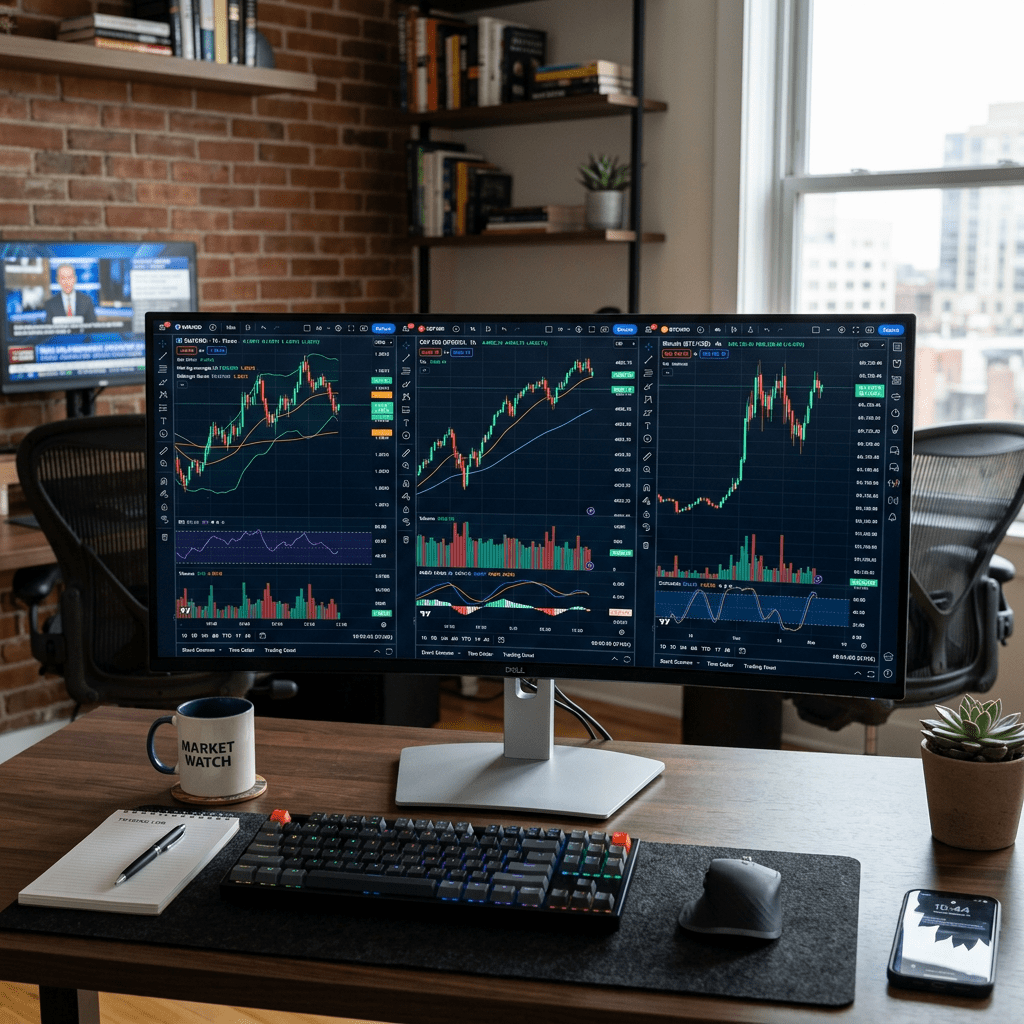
Why This Comparison Matters
Most new investors begin with stocks or ETFs.
That makes sense. Stocks and ETFs are more familiar, easier to understand, and commonly discussed in personal finance education. Many people know that a stock represents ownership in a company. Many also understand that an ETF can offer exposure to a group of assets, such as a stock index, sector, commodity, or bond market.
Futures are different.
They are not better or worse by default. They are simply a different type of financial instrument. Because they work differently, they require a different learning process.
At Invesmart, we believe new investors should understand these differences before using real capital. Futures can be useful as an investment conduit and market-access tool, but they also involve margin, leverage, contract specifications, and expiration dates.
That is why a demo-first approach is so important.
Before risking money, investors should use a demo account to observe how futures behave compared with stocks and ETFs. This helps them build market understanding without exposing their capital too early.
What Is a Stock?
A stock represents ownership in a company.
When you buy shares of a company, you become a partial owner of that business. Your investment is tied to the company’s performance, investor expectations, earnings, management decisions, industry trends, and the broader economy.
For example, if someone buys shares of a technology company, the value of those shares may be influenced by:
- Revenue growth
- Profit margins
- Product demand
- Competition
- Interest rates
- Investor sentiment
- Overall stock market conditions
Stocks are often used by investors who want long-term ownership exposure to businesses.
Some investors buy individual stocks because they believe in a company’s future. Others prefer not to choose individual companies and instead use ETFs for broader diversification.
Stocks are familiar, but they still carry risk. Prices can fall, companies can underperform, and investors can lose money.
However, compared with futures, stocks are usually more straightforward for beginners because they do not typically involve contract expiration or futures-style margin mechanics.
What Is an ETF?
An ETF, or exchange-traded fund, is a fund that trades on an exchange like a stock.
ETFs can hold a basket of assets. These assets may include stocks, bonds, commodities, currencies, or other instruments.
For example, an ETF may track:
- A broad stock index
- A specific sector
- A country or region
- A bond market
- A commodity
- A theme, such as technology or infrastructure
ETFs are popular because they can offer diversification. Instead of buying one company, an investor can buy exposure to many companies or assets through a single fund.
For many beginners, ETFs are a practical way to participate in markets without selecting individual stocks.
ETFs can still lose value, and some are more complex than others. But many traditional ETFs are easier to understand than futures contracts because they do not require the investor to manage expiration dates, contract months, or futures margin.
What Is a Futures Contract?
A futures contract is a standardized agreement based on the future price of an underlying asset or market.
Futures exist across many areas, including:
- Stock indexes
- Commodities
- Currencies
- Interest rates
- Energy products
- Metals
- Agricultural products
Unlike stocks, futures do not usually represent ownership in a company.
Unlike many ETFs, futures are contracts with specific terms, including contract size, expiration date, tick value, and margin requirements.
This means futures require investors to understand more than just price direction. They also need to understand how the contract works.
Before using futures with real money, investors should know:
- What the contract represents
- How much each price movement is worth
- When the contract expires
- What margin is required
- How leverage affects gains and losses
- What market forces drive the contract
- How volatility may impact account value
This is why futures should not be approached casually.
They can be powerful tools, but power without preparation can be dangerous.
Key Difference 1: Ownership vs Contract Exposure
The first major difference is ownership.
When you buy a stock, you own a share of a company.
When you buy an ETF, you own shares of a fund that holds or tracks a basket of assets.
When you participate in a futures contract, you are dealing with contract exposure to an underlying market.
This distinction is important.
A stock investor may ask:
“What company am I buying?”
An ETF investor may ask:
“What assets does this fund track?”
A futures investor must ask:
“What contract am I using, what market does it represent, and what obligations or risks come with it?”
Futures are more technical. They require attention to contract details.
That does not mean they are impossible for beginners to understand. It means beginners need a structured learning path.
Demo-first learning gives investors a place to study these differences before risking capital.
Key Difference 2: Expiration Dates
Stocks do not expire.
If you buy shares of a company, you can usually hold them as long as the company remains publicly listed and you choose to keep the position.
Most traditional ETFs also do not expire. You can buy and hold shares of an ETF over time, assuming the fund continues operating.
Futures contracts are different.
They have expiration dates.
This means a specific futures contract is tied to a particular delivery or settlement month. At some point, that contract expires.
For beginners, this can be confusing. They may not realize that futures are organized by contract months or that trading activity can shift from one contract month to another.
This creates questions such as:
- Which contract month am I observing?
- When does it expire?
- What happens at expiration?
- When does volume move to the next contract?
- Am I studying the correct contract?
These questions are unique to futures.
A demo account can help investors become familiar with expiration cycles before real money is involved.
Key Difference 3: Margin and Leverage
Margin and leverage are among the most important differences between futures, stocks, and ETFs.
With stocks and ETFs, many investors pay the full value of the shares they buy. Some may use margin accounts, but many long-term investors avoid borrowing or leverage.
In futures, margin works differently.
Futures margin is a required amount of capital that allows a participant to hold a contract position. It is usually much smaller than the full notional value of the contract.
This creates leverage.
Leverage means that a relatively small amount of capital can control a larger market exposure.
That can magnify gains, but it can also magnify losses.
For new investors, this is one of the biggest risks. A price movement that appears small on a chart may have a significant impact on the account because of the contract size and tick value.
That is why futures education must place risk first.
Before using real money, investors should use demo mode to understand:
- How margin works
- How leverage changes account movement
- How quickly losses can grow
- How position size affects risk
- Why capital protection matters
A demo account cannot remove all future risk, but it can help investors understand risk before accepting it.
Key Difference 4: Market Access
One reason investors become interested in futures is market access.
Futures can provide direct exposure to major global markets, including stock indexes, commodities, currencies, rates, and energy products.
Stocks provide ownership exposure to individual companies.
ETFs provide fund-based exposure to baskets of assets.
Futures provide contract-based exposure to specific markets.
For example, a person who wants to study broad equity market behavior may observe stock index futures. A person interested in inflation or global demand may observe commodity futures. A person interested in interest rate expectations may study rate futures.
This makes futures useful as a learning environment.
They help investors see how different parts of the global economy connect.
However, broad access does not mean beginners should follow every market at once.
A smarter approach is to choose one market, study it deeply, and use a demo account to observe its behavior over time.
Key Difference 5: Complexity
Stocks are not always simple, but the basic idea is easy to understand: you are buying ownership in a company.
ETFs add another layer, but many are still relatively beginner-friendly: you are buying shares of a fund that tracks a group of assets.
Futures require more technical understanding.
A futures investor must understand:
- Contract specifications
- Tick size and tick value
- Margin
- Leverage
- Expiration
- Settlement
- Volatility
- Market drivers
- Risk limits
This added complexity is why futures should not be treated as a shortcut.
A beginner should not approach futures by simply asking, “Which way will the price move?”
That question is incomplete.
A better set of questions would be:
- Do I understand this contract?
- Do I understand the risk?
- Do I know what market forces affect it?
- Do I know how much each price movement is worth?
- Do I have rules for managing exposure?
- Have I tested my process in demo mode?
These questions create a more responsible learning path.
Key Difference 6: Time Horizon and Behavior
Stocks and ETFs are often used by long-term investors. Many people buy them with the intention of holding for months or years.
Futures can also be studied and used with a structured view, but the contracts themselves have expiration dates and are often more sensitive to short-term market forces.
This does not mean futures should be treated as a fast-action game.
At Invesmart, we do not encourage beginners to think of futures as a day-trading activity.
Instead, we believe investors should use futures as a way to understand markets, test ideas, and develop disciplined decision-making.
The time horizon should be connected to the investor’s plan, the contract being studied, and the risk framework in place.
Without a plan, futures can encourage impulsive behavior. With a plan, they can become a structured learning environment.
Which Is Better: Futures, Stocks, or ETFs?
There is no universal answer.
Stocks, ETFs, and futures serve different purposes.
Stocks may be useful for investors who want company ownership.
ETFs may be useful for investors who want diversified exposure.
Futures may be useful for investors who want to study or access specific markets through standardized contracts.
The right instrument depends on the investor’s knowledge, objectives, risk tolerance, and preparation.
For beginners, the most important point is this:
Do not use an instrument you do not understand.
If you understand stocks but not futures, do not assume futures work the same way.
If you understand ETFs but not margin, do not assume futures risk is similar.
If you are curious about futures, start with education and demo practice.
That is the smart path.
How to Compare Them in Demo Mode
A useful exercise is to compare how a futures market behaves relative to a familiar stock or ETF.
For example, an investor may observe:
- A stock index futures contract and a broad stock market ETF
- A gold futures contract and a gold-related ETF
- A crude oil futures contract and an energy-related ETF
The purpose is not to decide immediately which one is better.
The purpose is to learn.
In your demo account or observation journal, track:
- How each instrument moves
- Which one appears more volatile
- What news affects each market
- How futures contract specifications change risk
- How margin affects simulated exposure
- How your emotions respond to faster movement
- What questions you still need to answer
This exercise can help investors understand the difference between market exposure and product structure.
It also reinforces why demo-first learning matters.
Conclusion
Stocks, ETFs, and futures are different financial instruments.
Stocks represent ownership in a company. ETFs represent shares in a fund that typically tracks a group of assets. Futures are standardized contracts based on the future price of an underlying market or asset.
Futures can offer meaningful market access, but they also involve margin, leverage, expiration dates, and contract specifications. These features make education and risk management essential.
New investors should not treat futures like stocks or ETFs.
They should learn the differences first.
At Invesmart, we believe the smartest approach is to go demo first. Use a demo account to observe, compare, test, and understand before risking real capital.
Learn the instrument. Respect the risk. Practice before capital.

