
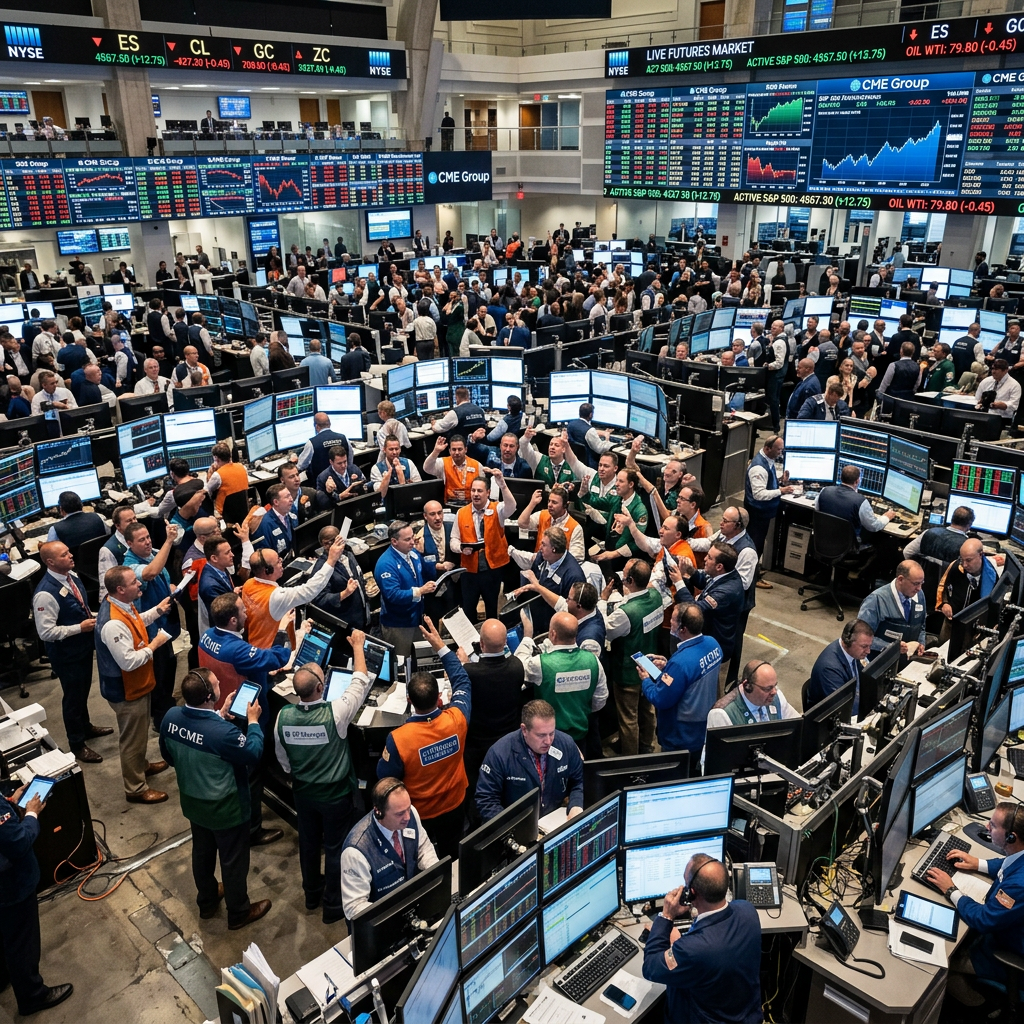
Futures Contracts Can Seem Complicated at First
For many new investors, the futures market feels intimidating.
The language sounds technical. The contracts seem complex. The risks appear difficult to understand. And because futures are often associated with professional traders, many beginners assume the market is not for them.
But futures do not have to be explained in a confusing way.
At their core, futures contracts are agreements connected to the future price of an asset or market. They are used across the global economy by companies, institutions, producers, investors, and market participants who want to manage risk or gain exposure to price movements.
That does not mean futures are simple or risk-free. They are powerful instruments and should be approached with preparation.
At Invesmart, we believe the best way to begin is with a demo-first approach.
Before risking real capital, investors should understand what futures are, how they work, what makes them different from stocks or ETFs, and why risk management is essential.
This article gives you a beginner-friendly foundation.
What Is a Futures Contract?
A futures contract is a standardized agreement to buy or sell an underlying asset at a future date for a price agreed upon today.
That may sound abstract, so let’s break it down.
A futures contract usually includes:
- The underlying market or asset
- The contract size
- The price
- The expiration date
- The exchange where it trades
- The rules for settlement
The underlying asset can be many things, including:
- A stock index
- A commodity
- A currency
- An interest rate product
- An energy product
- A metal
- An agricultural product
For example, there are futures contracts based on major stock indexes, crude oil, gold, corn, Treasury bonds, and currencies.
When people participate in futures markets, they are not simply looking at random price movements. They are interacting with markets that reflect expectations about supply, demand, inflation, interest rates, economic growth, and investor sentiment.
That is why futures can be valuable as an educational market-access tool.
They help investors observe how global markets respond to changing conditions.
A Simple Example
Imagine a coffee producer who wants to protect against the possibility that coffee prices fall in the future.
The producer may use a futures contract to lock in a price today for coffee that will be delivered or financially settled later.
On the other side, a buyer may want to protect against the possibility that coffee prices rise. That buyer may also use futures to manage future price uncertainty.
This is one of the original purposes of futures markets: helping participants manage risk connected to future prices.
Now, not every person using futures is a producer or commercial buyer. Many market participants use futures to gain exposure to price movements or manage portfolio risk.
But the basic idea remains the same:
A futures contract is tied to expectations about future value.
For individual investors, understanding this concept is important. Futures are not just symbols moving on a screen. They are connected to real markets, real economic forces, and real risk.
What Markets Have Futures Contracts?
Futures exist across many major markets.
Some of the most common categories include:
Stock Index Futures
These contracts are linked to stock market indexes. They allow participants to gain exposure to broad equity market movement.
Examples include futures connected to major U.S. stock indexes.
For investors, stock index futures can be useful to study because they reflect risk appetite, investor sentiment, earnings expectations, interest rate concerns, and macroeconomic conditions.
Commodity Futures
Commodity futures are linked to physical goods such as energy, metals, and agricultural products.
Examples include:
- Crude oil
- Natural gas
- Gold
- Silver
- Corn
- Wheat
- Soybeans
Commodity futures help investors understand supply and demand, inflation pressures, geopolitical risk, production trends, and global growth.
Currency Futures
Currency futures are linked to exchange rates between currencies.
They can reflect interest rate expectations, economic strength, central bank policy, and international capital flows.
Interest Rate Futures
Interest rate futures are connected to debt markets and expectations about future interest rates.
They can be more complex for beginners, but they are important because interest rates influence nearly every financial market.
Together, these markets make futures a broad gateway into the global economy.
How Futures Are Different from Stocks
Many investors first learn about stocks.
When you buy a stock, you own a share of a company. Your investment is connected to that company’s business performance, earnings, growth, and market valuation.
Futures are different.
A futures contract does not usually represent ownership of a company. It represents an agreement based on the price of an underlying market or asset.
This difference matters.
With stocks, investors often think in terms of company fundamentals.
With futures, investors must also think about:
- Contract specifications
- Expiration dates
- Margin requirements
- Leverage
- Volatility
- Market drivers
- Settlement rules
This does not make futures better or worse than stocks. It makes them different.
Because they are different, investors should not approach futures with the same assumptions they use for stocks.
That is one reason demo-first learning is so important.
A demo account gives investors time to understand these differences before real money is involved.
What Does Standardized Mean?
Futures contracts are standardized.
This means that the exchange defines the terms of the contract, including the size, expiration cycle, tick value, and other rules.
Standardization helps create transparency and liquidity.
For example, if many participants are using the same contract specifications, it becomes easier for buyers and sellers to interact in the market.
But standardization also means investors must know exactly what contract they are observing.
A beginner should never look only at the contract symbol and price. They should understand what the contract represents.
Before using real capital, an investor should ask:
- What is the underlying market?
- What is the contract size?
- What is the minimum price movement?
- What is each tick worth?
- When does the contract expire?
- What are the margin requirements?
- What events typically affect this market?
These questions are essential.
In demo mode, investors can learn how contract specifications affect simulated results without risking real capital.
What Is Margin in Futures?
Margin is one of the most important concepts in futures investing.
In futures, margin is not the same as paying the full value of the contract. Instead, it is a required amount of capital that allows a participant to hold a futures position.
This is where leverage enters the picture.
Because the required margin may be much smaller than the full notional value of the contract, futures can magnify both gains and losses.
That is powerful, but it is also risky.
A small price movement can have a large impact relative to the capital committed.
For this reason, margin should never be treated casually.
New investors should use demo accounts to study how margin and leverage affect account behavior. They should observe how quickly simulated gains and losses can change, especially during volatile market conditions.
Understanding margin is not optional.
It is part of capital protection.
Why Expiration Dates Matter
Futures contracts have expiration dates.
This means a specific contract does not last forever. At some point, it expires and must be settled or replaced by another contract.
This is different from owning a stock, which can be held indefinitely as long as the company remains listed and the investor chooses to keep it.
Expiration introduces important considerations.
Investors must understand:
- Which contract month they are looking at
- When the contract expires
- What happens at expiration
- Whether the contract is physically settled or financially settled
- How volume shifts from one contract month to another
For beginners, this can feel confusing at first.
That is another reason to begin in demo mode.
A demo account allows investors to become familiar with contract months and expiration cycles before they make real-money decisions.
Why Futures Require Discipline
Futures are efficient and flexible, but they require discipline.
Because they involve leverage, margin, expiration, and fast-moving markets, futures can punish careless decisions.
A beginner should avoid the mindset of “I’ll just try it and see what happens” with real money.
Instead, the better mindset is:
“I will learn the structure first. I will observe one market. I will practice in demo mode. I will understand the risks before committing capital.”
This is the foundation of the Invesmart approach.
Futures should not be treated like a game or a shortcut. They should be approached as serious financial instruments that require preparation.
That preparation begins with education and simulation.
How to Start Learning Futures the Smart Way
If you are new to futures, do not try to learn everything at once.
Start with a simple process.
First, choose one futures market to observe. For example, you might choose a stock index future, gold, crude oil, or another market that interests you.
Second, learn what the contract represents.
Third, study the contract specifications.
Fourth, observe how the market reacts to news, economic data, and investor sentiment.
Fifth, use a demo account to practice without real money.
Sixth, keep a journal of what you observe and what you learn.
The goal is not to rush.
The goal is to build understanding.
A smart beginner does not need to master every futures market immediately. A smart beginner needs to develop a repeatable process for learning one market well.
That process can later be applied to other markets.
Conclusion
A futures contract is a standardized agreement based on the future price of an underlying market or asset. Futures exist across stock indexes, commodities, currencies, interest rates, energy products, metals, and agricultural markets.
For investors, futures can provide a powerful way to understand global markets. But they also involve risk, margin, leverage, expiration dates, and contract specifications that must be understood before real money is used.
That is why Invesmart believes in a demo-first approach.
Before risking capital, investors should learn how futures work, observe market behavior, understand contract details, and practice decision-making in a simulated environment.
The smart path is not to rush into futures.
The smart path is to learn first.
Go demo first. Understand the contract. Protect your capital.

